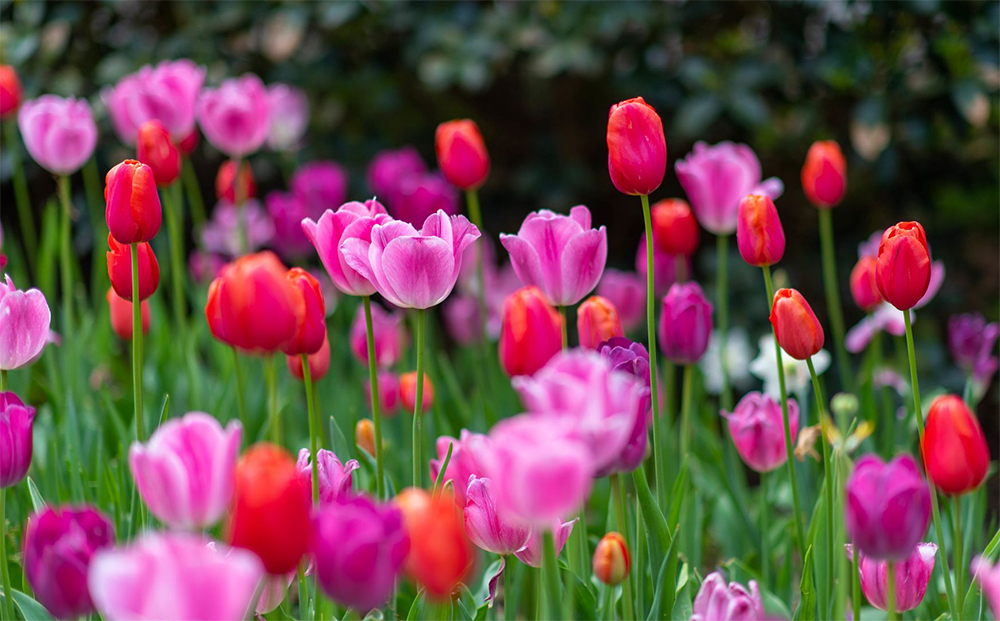
Tulips are among the most popular spring flowers, admired for their bright and beautiful blooms. To ensure they grow and bloom successfully each year, it is important to plant them correctly. One of the most common issues when planting tulips is burying the bulbs too deep, which may prevent them from sprouting. In this article, we’ll cover how to plant tulips so they’re not buried too deeply and explain the method of using planting baskets.
Why is it important not to bury tulips too deep?
Tulips require a specific planting depth. The standard recommended depth is about 15 cm (6 inches), but this can vary depending on the soil type. If bulbs are planted too deep, the plants may struggle to break through the soil and may not sprout at all. On the other hand, bulbs planted too shallow may not withstand winter frosts, especially in colder regions.
🌱 How to avoid planting too deep?
To avoid mistakes when planting, follow these key guidelines:
🔹 Correct planting depth: For tulips, it is usually recommended to plant bulbs about 15 cm deep. This depth provides enough space for root growth while keeping the bulbs from being buried too far.
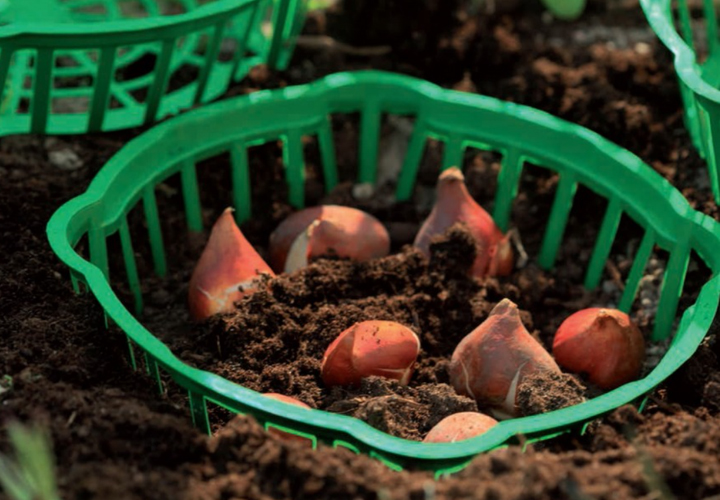
🔹 Using planting baskets: One of the most convenient ways to control planting depth is by using special planting baskets. These baskets are plastic or metal containers with holes for water drainage and root growth. A basket limits the planting depth and helps the plant root quickly.
🔹 Considering soil type: If the soil is very dense or clay-heavy, bulbs may get stuck and have difficulty sprouting. In this case, use baskets to limit the planting depth and add sand or compost to the soil to improve drainage.
Using planting baskets for tulips
Planting baskets are not only a practical tool to prevent planting bulbs too deep but also an excellent solution for improving growth and protecting the plants. Here’s how to use planting baskets properly:
- Choosing a basket: Gardening stores offer baskets in various sizes and materials. Plastic baskets are easy to use and durable, while metal may be more resistant to outdoor elements. Choose a basket of the right size so the bulbs don’t get crowded and have enough space to grow.
- Preparing the soil: Before planting the bulbs, prepare the soil. Make sure it is loose and well-drained. If the soil is too heavy, mix in sand or compost. This helps create suitable conditions for root growth and prevents water stagnation inside the basket.
- Placing the bulbs correctly: Place tulip bulbs in the basket so they do not touch each other. Leave enough space between them for growth. The bulbs should be positioned with the roots facing down and the tips up.
- Planting the basket: Once the bulbs are in the basket, gently place it into the ground. The basket should be set at a depth of about 15 cm. This ensures the correct planting depth and prevents the bulbs from being buried too deep.
🌷 Tulip care after planting
After planting tulips in baskets, proper care is important. Water the plants regularly, especially during the growing season. Also, ensure the soil does not dry out completely or become waterlogged, as excessive moisture may cause the bulbs to rot.
Advantages of using planting baskets
🔹 Control over planting depth: Baskets help maintain the correct depth, which is essential for healthy tulip development.
🔹 Protection from pests: Baskets provide added protection for bulbs against rodents and other pests that may damage the plants.
🔹 Improved drainage: Baskets aid in drainage, particularly useful if your garden soil is heavy or clay-based.
🔹 Convenience for transplanting: Baskets simplify transplanting, as the bulbs remain in a protected environment and are easy to move.
Proper tulip planting plays a vital role in their successful growth and blooming. Using planting baskets helps prevent bulbs from being planted too deeply and improves conditions for their development. With baskets, you can control the planting depth, ensure proper drainage, and protect the bulbs from pests. It’s a simple and effective method that will help you enjoy beautiful tulips in your garden year after year.