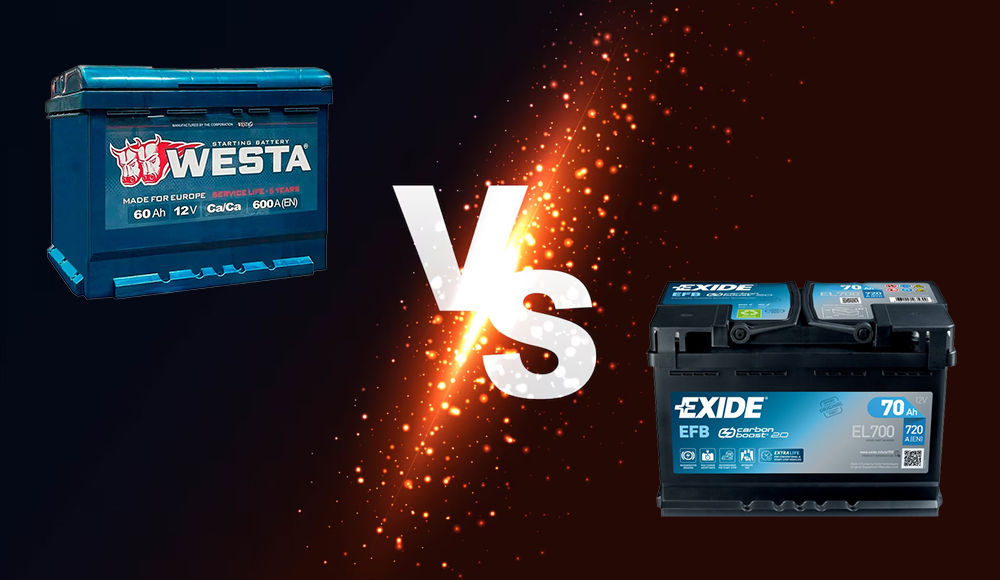
Car batteries are the heart of a vehicle’s electrical system. There are many types of batteries available on the market, including standard lead-acid batteries and their advanced versions, such as EFB (Enhanced Flooded Battery). In this article, we will examine the key differences between these battery types and determine whether investing in an EFB battery is worth it.
Main Characteristics of Standard Batteries
Regular lead-acid batteries are widely used in vehicles due to their reliability and affordability. Their key features include:
- Simple Design: They consist of lead plates submerged in an electrolyte solution.
- Affordability: This is the most budget-friendly battery option available.
- Suitable for Standard Conditions: Ideal for vehicles without Start-Stop systems and high energy consumption.
However, standard batteries have limitations. They are not designed for frequent deep discharges and tend to have a shorter lifespan under heavy usage.
Features of EFB Batteries
EFB (Enhanced Flooded Battery) is an improved version of the traditional lead-acid battery. Key features of EFB batteries include:
- Reinforced Plates: The battery plates are coated with a special layer, increasing their resistance to corrosion.
- Higher Cycle Life: EFB batteries can withstand more charge-discharge cycles compared to standard batteries.
- Suitable for Start-Stop Systems: These batteries can quickly recover charge after engine starts.
- Improved Performance: EFB batteries maintain capacity better in low temperatures and under heavy loads.
Battery Capacity and Its Importance
Battery capacity determines how much energy the battery can deliver over a certain period. It is measured in amp-hours (Ah) and plays a crucial role in battery selection:
- For standard vehicles: A battery with a capacity of 45–70 Ah is suitable, depending on engine size and electrical equipment.
- For vehicles with Start-Stop systems: Higher capacity batteries (70 Ah and above) are required, as they must provide energy for frequent engine starts.
- Temperature impact: In cold climates, battery capacity can decrease, so choosing a battery with extra capacity is essential for colder regions.
The difference between standard and EFB batteries also lies in their ability to maintain capacity under high loads. EFB batteries are more resistant to deep discharges, making them better suited for modern vehicles with increased energy demands.
Key Differences Between Standard and EFB Batteries
| Feature | Standard Battery | EFB Battery |
|---|---|---|
| Price | Low | Medium |
| Deep Discharge Resistance | Low | High |
| Cycle Life | 300–500 cycles | 800–1000 cycles |
| Suitable for Start-Stop | No | Yes |
| Vibration Resistance | Medium | High |
| Capacity Retention Under Load | Medium | High |
Which Battery Should You Choose?
The choice between a standard and an EFB battery depends on your needs and vehicle type. If you drive a car without a Start-Stop system and do not experience high battery loads, a standard lead-acid battery will be a budget-friendly and reliable option. However, if your car is equipped with a Start-Stop system or you frequently drive in city traffic with frequent stops, an EFB battery is a better choice due to its durability and ability to withstand frequent charge-discharge cycles.
EFB batteries provide an excellent balance between affordability and performance. They offer better characteristics than regular batteries while being more cost-effective than AGM batteries. If your vehicle requires higher reliability and performance, investing in an EFB battery is a smart decision.